

PHASE 3 · ACTION
Implementation is where hope usually replaces method: software and AI deployed as solutions.
Action turns the portfolio into governed execution: framework first, activity second.
Phase 3 of 4 · one defined artifact · feeds Distill
WHAT IT IS

Action begins with a framework, not with activity.
Action is the third phase of every ROAD engagement. It takes the prioritized initiatives from Opportunity and translates them into orchestrated change: we develop the strategies, concepts, and action plans that integrate everything Readiness and Opportunity established. Every initiative lands as part of one consistent transformation design, connected to strategy, processes, data flows, governance, and what the organization can actually absorb.
Action is not churning through tasks. Before anything is built, the phase establishes the mechanisms that keep execution governable: responsibilities, decision rhythms, measurement and learning cycles. The doing follows the frame, never the other way around.

WHY IT MATTERS
Most initiatives don't fail at the idea. They fall apart in execution.
Without a frame, execution decays into activity: initiatives run as isolated projects, technical solutions get implemented without organizational anchoring, and the pace of change drifts away from what people can actually adopt. Progress gets bought with overload — fast at first, fragile after.
Action exists to prevent exactly that. It holds the balance between speed and resilience, so change is carried by stable structures — clarity, consistency, the ability to learn — and becomes capability instead of evaporating into activity.
HOW IT WORKS
From portfolio to governed execution, in four moves.
The measurement protocols from Opportunity are already in place: execution starts governed, not hopeful.
We develop the strategies, concepts, and action plans that integrate everything Readiness and Opportunity established. All execution builds on that foundation.
01
Establishing the frame
Responsibilities, decision rhythms, and measurement and learning cycles are defined: the mechanisms that keep execution steerable from the first step to the last.
02
Anchoring governance
The prioritized initiatives are translated into executable sequences, paced to the organization's actual absorption capacity, its people included.
03
Sequencing execution
Every step is read against its protocol: what works is scaled, what doesn't is adjusted. Progress stays visible, traceable, and correctable.
04
Measuring and learning
Strategy, concept, and action plan in governed execution: defined initiatives, clear ownership, traceable progress.
THE ARTIFACT
Strategy, concept, and action plan
The integrated design every initiative builds on: connected to strategy, processes, data flows, and governance, not a stack of isolated projects.
Clear ownership and defined decision rhythms: who decides what, when, and on which basis. Set before execution starts, not after it stalls.
Governance setup
Measurement and learning cycles
Every initiative carries its protocol into execution: what is measured, how results are read, and which decision follows from them.
The initiatives in a paced order the organization can carry: ambitious where it can be, deliberate where it must be.
Executable sequences
Deliberately not in this phase:
isolated projects. What cannot be anchored in the overall design does not get built.
With Action in place, a leadership team keeps control of a moving system: progress is visible, decisions have owners and rhythms, and course corrections happen by design instead of by crisis. That is what turns implementation from a leap of faith into a governed process.
THE HANDOFF
Action feeds Distill.
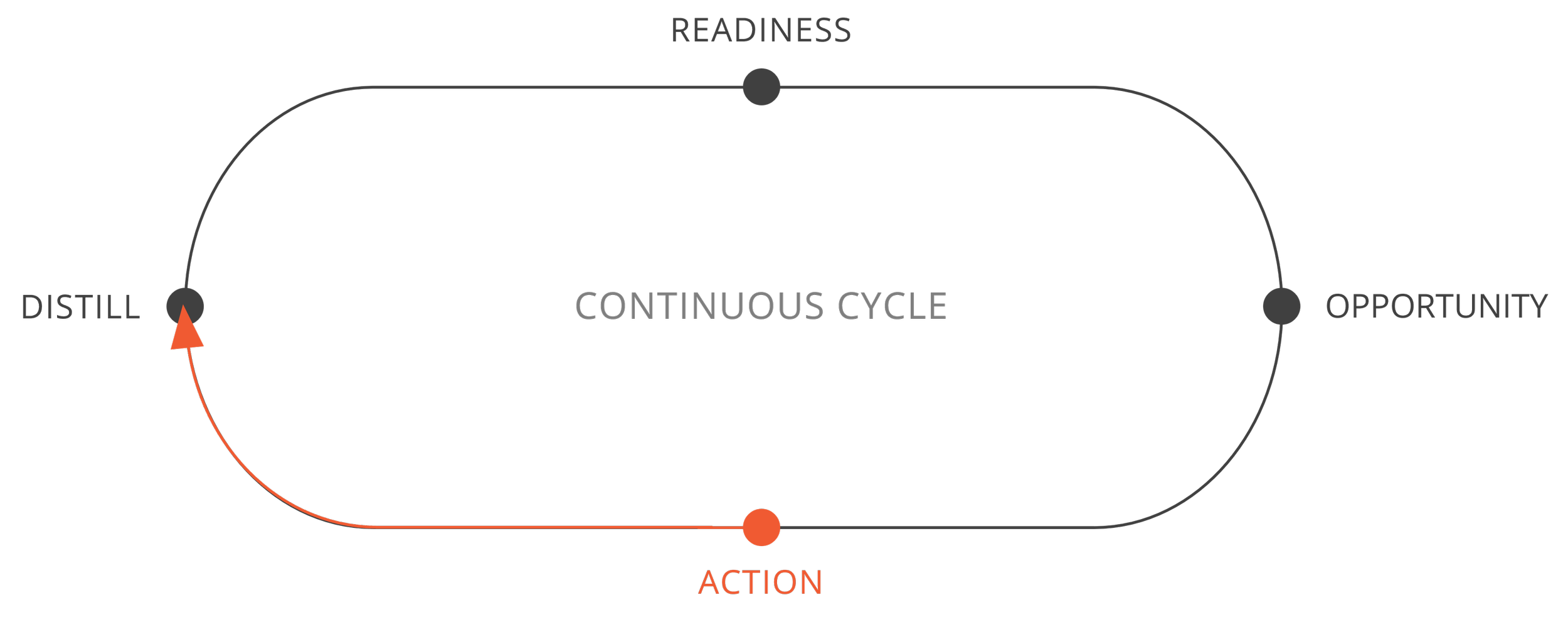
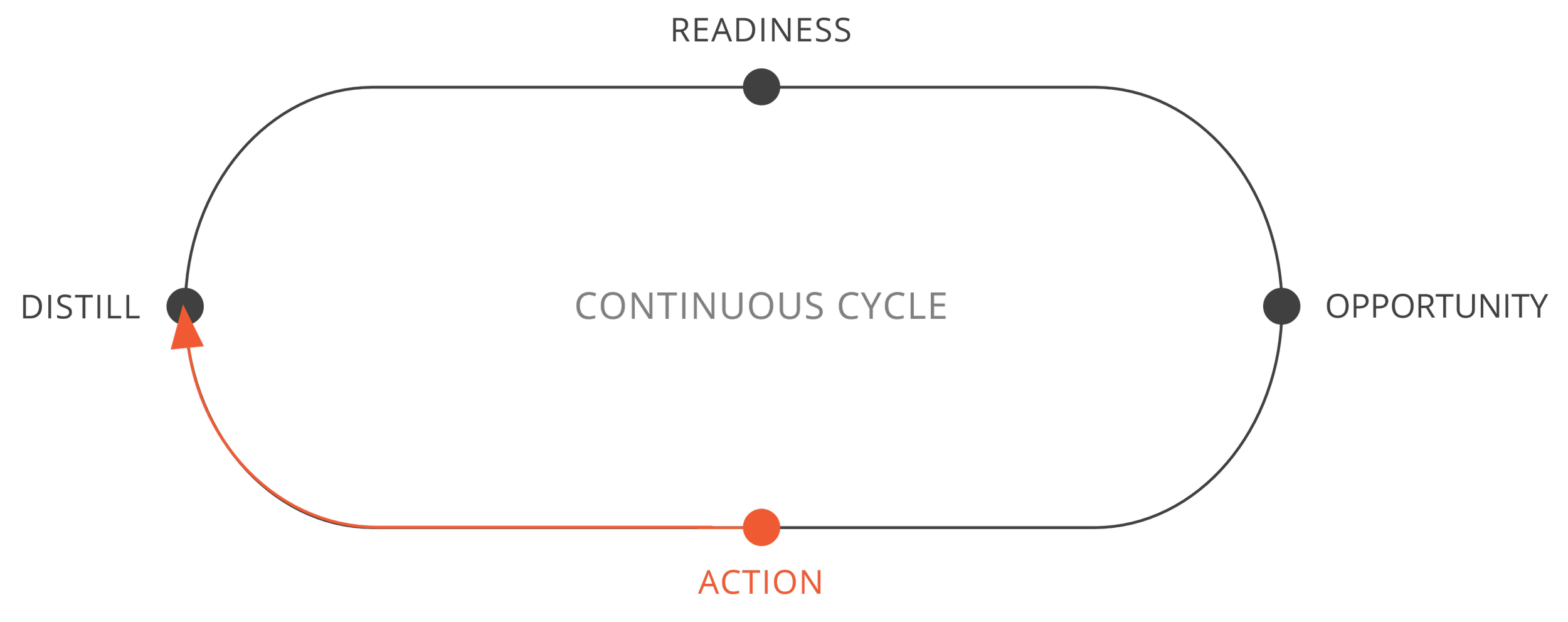
Execution produces more than results: it produces evidence. What worked, what didn't, and under which conditions is handed to Phase 4, where success is turned from an event into a mechanism the organization keeps.
Execution is a system, not a sprint.
Find out what governed execution
looks like for your program.
Thirty minutes. Your situation, our read on it, and whether structured work would change anything.