
Diagnosis before solution.
APPROACH
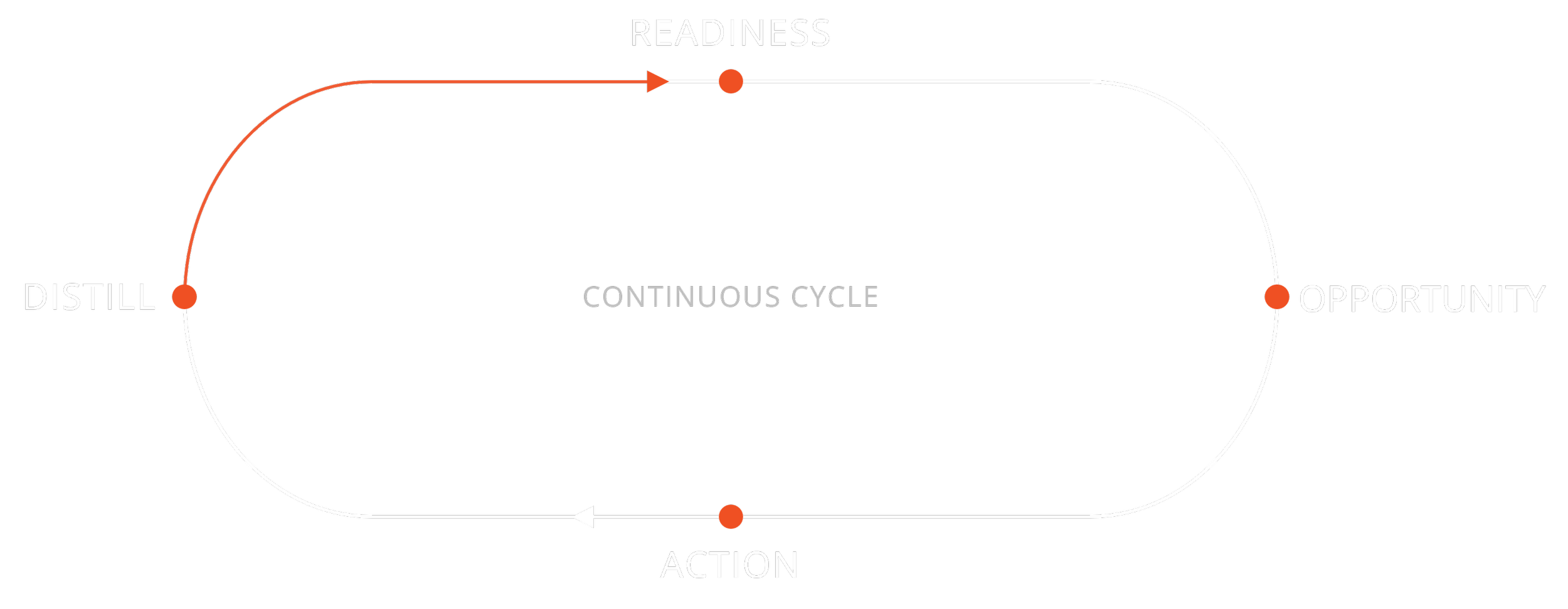
Four phases: Readiness, Opportunity, Action, Distill.
One disciplined way to turn complexity into action.
HOW ROAD WORKS
One method that makes complex programs controllable.
Task by task, module by module, process by process.
ROAD exists to put you in control of a complex program: decisions based on evidence instead of hope, risks visible before budgets are committed, and progress you can verify at any point.
The method achieves this through consistent decomposition: the entire CX and CRM transformation process is broken down into defined tasks, organized into modules and processes sequenced like clockwork, and controlled from diagnosis to execution. Every engagement follows that sequence, in every phase. Nothing is improvised, and nothing depends on who happens to be in the room.
At the core of every phase sit assessments and scorecards. They make strengths, weaknesses, and risks explicit and measurable. What is known can be addressed, prepared for, or prevented. That is what turns diagnosis into the basis for decisions: clear targets, and the ability to simulate and test initiatives before major investments are committed.
This is why the sequence matters. Each phase turns assumption into established fact, risks included. Software and AI become what they are: instruments within a structured roadmap. And success turns from something to celebrate into something to understand, replicate, and scale.
METHOD DOMAINS
6
MODULES
50
PROCESSES
600
TASKS
6,000+

Every task is defined, sequenced, and connected. Every gap, decision, and measure can be traced.

Depth is not complexity. Depth is repeatability.


THE FOUR PHASES
Each phase answers one question
and produces one defined artifact.
PHASE 1 - READINESS
Budgets are committed before anyone has established what the organization can actually carry.

Readiness establishes what is actually there. Structured assessments examine the formal side — strategy, processes, data, governance — and, with equal weight, the cultural one: the attitude, competence, and resilience of the people who carry every transformation. The result is not a list of deficits but a coherent, organization-wide picture: the gaps to the target state, the segments already mature enough to generate value quickly, and scored reference points against which later progress is measured.
THE ARTIFACT
A scored readiness baseline: maturity levels, gap analysis, and the shared frame of reference the leadership team decides from.
PHASE 2 - OPPORTUNITY
Without an established baseline, the perception of opportunity rests on intuition, feeling, and belief.

Opportunity translates the baseline into realizable value. Every potential initiative is measured directly against the maturity levels, resilience indicators, and governance structures established in Readiness, then weighted by feasibility, impact, and risk, including what the organization can culturally absorb. The outcome is a focused portfolio, not a collection of theoretical possibilities: ambitious under real conditions, deliberately sequenced, and sized to avoid the overload that breaks programs.
THE ARTIFACT
A prioritized opportunity portfolio: quantified, risk-weighted, and sized to demonstrated readiness.
PHASE 3 - ACTION
Implementation is where hope usually replaces method: software and AI deployed as solutions.
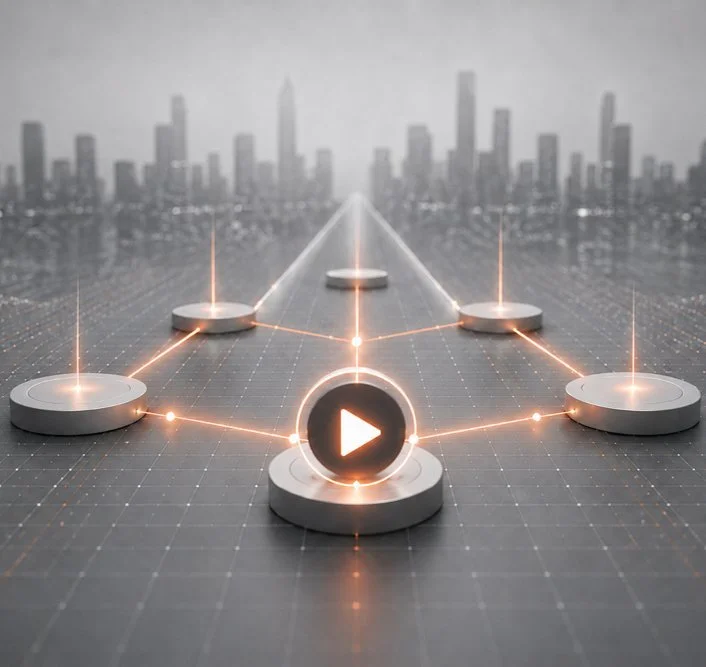
Action begins with a framework, not with activity. We develop the strategies, concepts, and action plans that integrate everything Readiness and Opportunity established; all execution builds on that foundation. Execution then runs as an orchestrated process: responsibilities, decision rhythms, and measurement and learning cycles keep it governable. Initiatives land as integrated parts of one transformation design instead of isolated projects, and the pace of change stays within what the organization and its people can carry.
THE ARTIFACT
Strategy, concept, and action plan in governed execution: defined initiatives, clear ownership, traceable progress.
PHASE 4 - DISTILL
Success gets celebrated.
It rarely gets understood.

Distill turns results into mechanisms. It examines which structural, technological, cultural, and human factors made success possible, which cause-and-effect relationships can be demonstrated, and whether the hypotheses from Readiness and Opportunity held. What proves reproducible becomes a system: standards, decision logic, governance, scalable process and data architectures. Training and enablement anchor it, so new ways of working are not just understood but lived. Isolated wins become structural progress.
THE ARTIFACT
Validated success factors, converted into standards and decision logic — and capability the organization keeps.
CONTINUOUS CYCLE
Distill feeds the next Readiness cycle.
ROAD does not end with delivery. What Distill makes reproducible becomes the baseline for the next cycle: validated success factors raise organizational maturity, and each pass through the four phases starts from a higher level of evidence. New cycles are gated, not scheduled. The next wave starts only where the re-assessed readiness shows the maturity to carry it. And cycles can overlap: while one wave matures into routine, the next is already in Readiness, built on the lessons of the first. Transformation stops being a project and becomes an operating capability.
DISCIPLINES
Two disciplines.
Two capabilities.
One system.
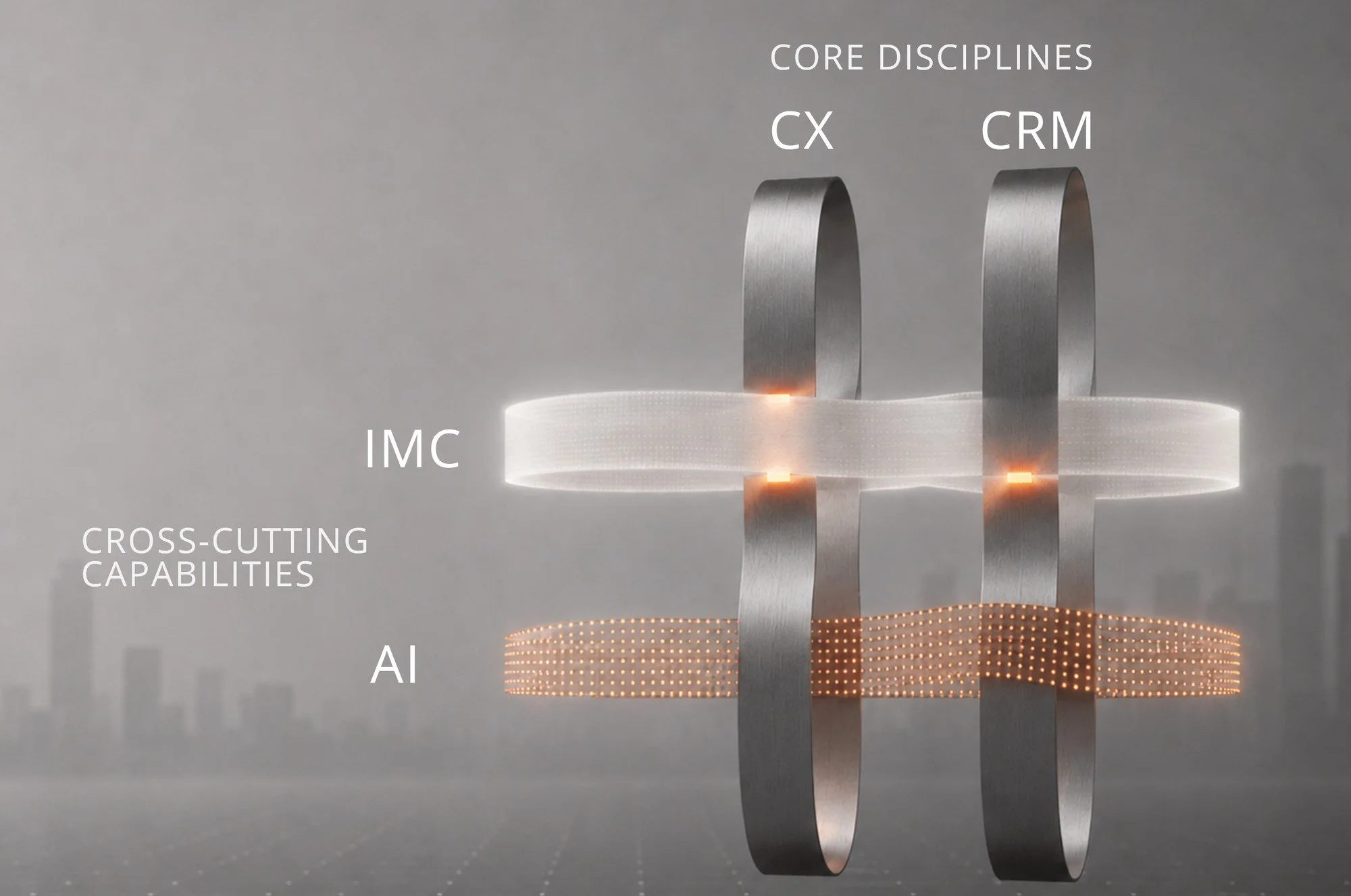
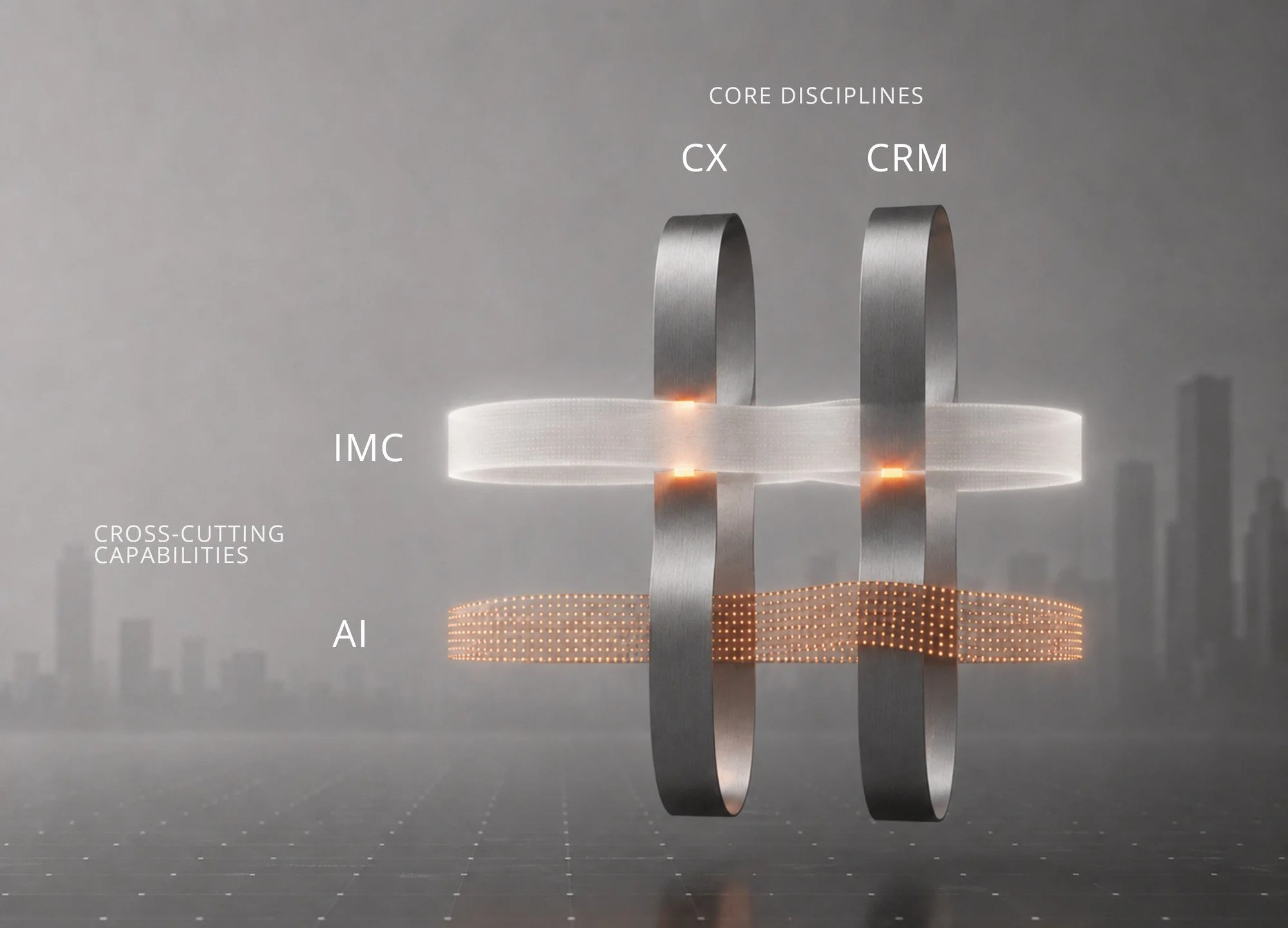
CX is the experience logic: how the organization is perceived at every point of contact. CRM is the relationship logic: how customer relationships are built and steered. IMC is the communication logic that connects the two. And AI runs through all of it, every discipline and every phase, as an instrument for precision, automation, and decision quality.
Each can be assessed in isolation. Within ROAD, they run as one system, phase by phase. That is what prevents parallel initiatives, redundancies, and siloed logic.
We don't promise success. We make failure less likely.
See what ROAD would find in your program.
Thirty minutes. Your situation, our read on it, and whether structured work would change anything.