

PHASE 2 · OPPORTUNITY
Without an established baseline, the perception of opportunity rests on intuition, feeling, and belief.
Opportunity translates the baseline into a prioritized portfolio, sized to what the organization can actually carry.
Phase 2 of 4 · one defined artifact · feeds Action
WHAT IT IS

Opportunity determines what is actually worth doing, and in which order.
Opportunity is the second phase of every ROAD engagement. It translates the Readiness baseline into realizable value: candidate initiatives are tested against the maturity levels, resilience indicators, and governance structures the baseline established, then weighted by three parameters: impact, ease of execution, and how easily the organization can digest the change. What emerges is a focused set of priorities, not a collection of possibilities: one to three initiatives the organization can actually carry, in a deliberate sequence.
Opportunity is specification, not execution. It defines what should be done, why, and how success will be measured and read. The doing itself belongs to the next phase.

WHY IT MATTERS
An organization that starts from ideas ends up with a portfolio of wishes: initiatives chosen by conviction, competing for the same resources, sized to ambition instead of capacity. That is how companies run ten programs in parallel and see none of them land.
Opportunity inverts the logic. Every recommendation is developed out of the baseline, weighted against what the organization can carry, and cut, deliberately, to the few moves that will actually deliver. If more than three initiatives look urgent, the problem is structural, and the baseline will have shown it.
Great ideas are not found.
They are developed.
HOW IT WORKS
From baseline to portfolio, in four moves.
Every move traces back to the baseline. Nothing in the portfolio rests on opinion.
Candidate initiatives are developed out of the baseline: its gaps, strengths, and constraints. Nothing enters the process as a free-floating idea; every candidate exists because the baseline points to it.
01
Deriving candidates
Each candidate is weighted by three parameters: its impact, the ease of executing it, and how easily the organization can digest the change. Together they decide what qualifies as a real priority.
02
Weighing and filtering
For each candidate, a task-specific KPI framework is built, and best, worst, and optimum scenarios are simulated. The simulations surface the hidden effort that disqualifies a high-payoff move.
03
Simulating outcomes
The initiatives that hold up are specified in full, each with its complete measurement protocol, and put into a recommended order the organization can follow one step at a time.
04
Specifying and sequencing
THE ARTIFACT
A prioritized opportunity portfolio: quantified, risk-weighted, and sized to demonstrated readiness.
Prioritized initiatives
The one to three moves worth making now, each derived from the baseline and weighted for impact, ease of execution, and digestibility.
Best, worst, and optimum case per initiative, built on its KPI framework: the predicted outcome before any budget is committed.
Scenario simulations
For every recommendation: what is measured, where, when, and by whom; how results are interpreted, and which decision follows from them.
Measurement protocol
The recommended order, with every recommendation traceable back to the baseline, so the why stays visible at every step.
Sequence and rationale
Deliberately not in this phase:
wish-list initiatives. What cannot be traced back to the baseline does not enter the portfolio.
With the portfolio in hand, a leadership team can decide what to fund, what to postpone, and what not to pursue, knowing the predicted outcome, the effort, and the exit logic before the money moves. They see the future they are deciding on. And the portfolio is never handed off cold: it is presented, challenged, and decided as a team.
THE HANDOFF
Opportunity feeds Action.
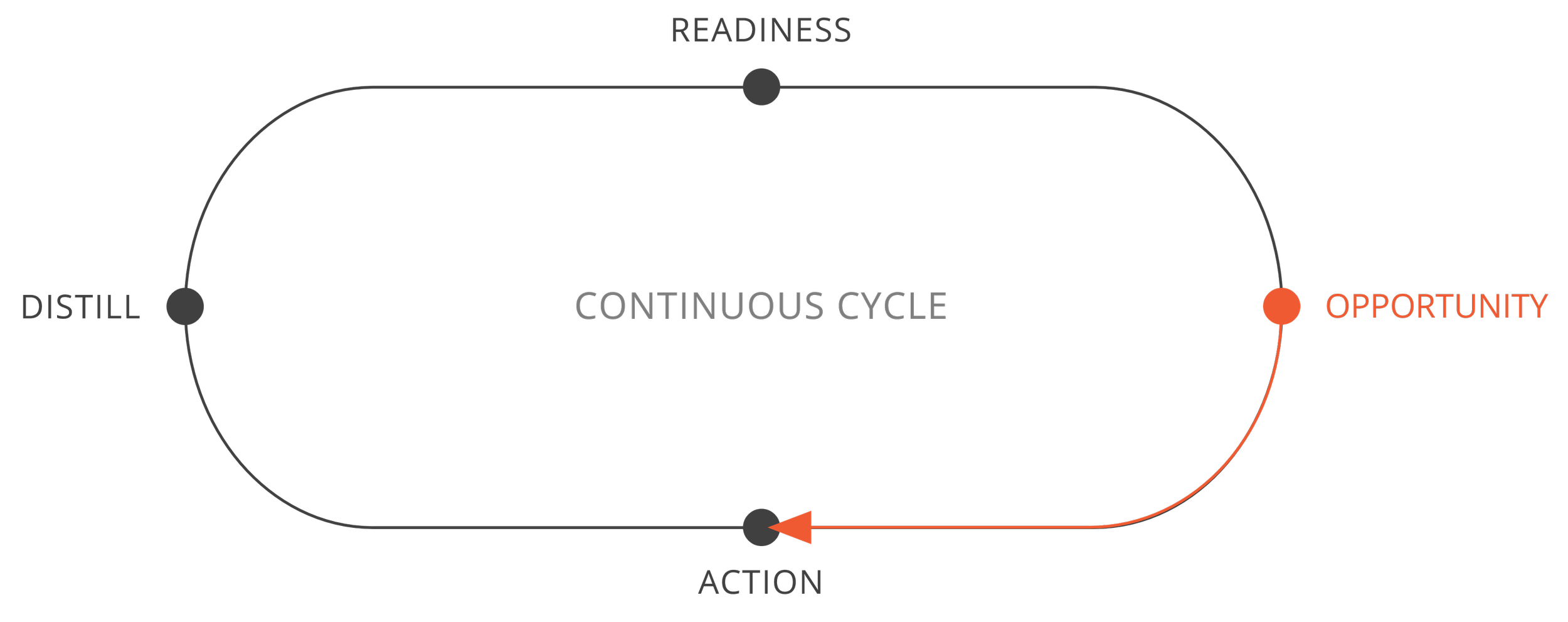
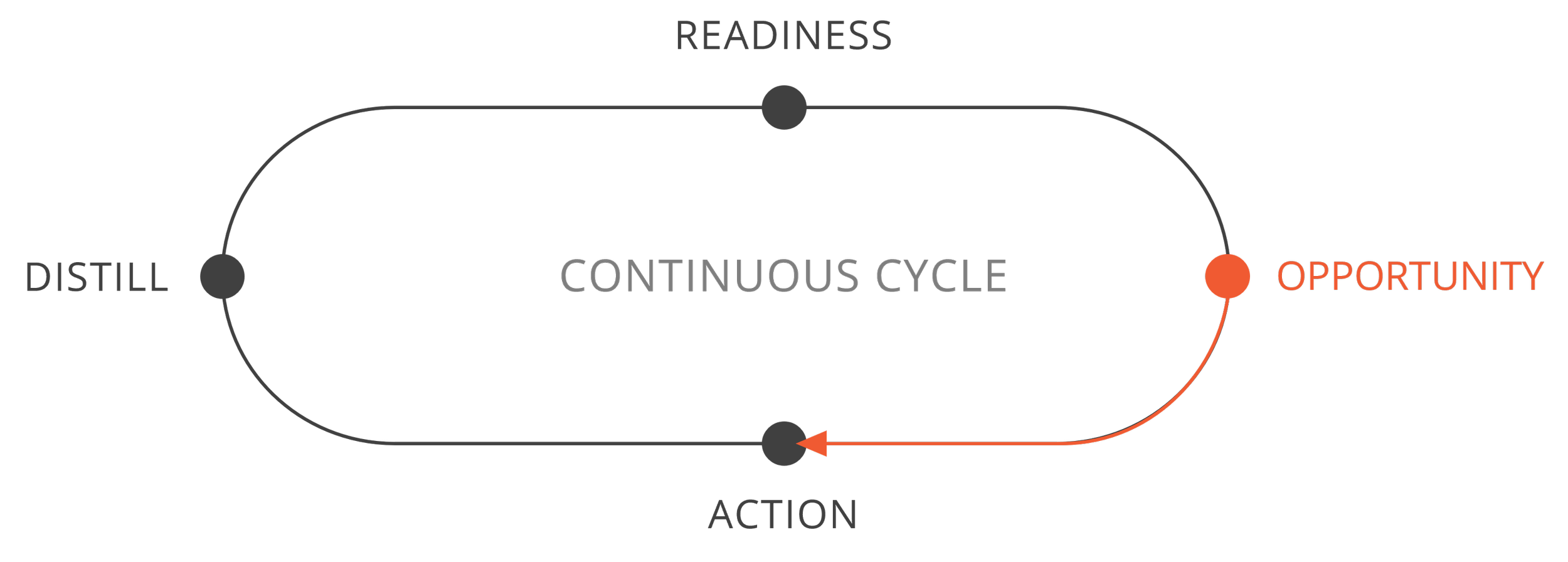
The portfolio becomes the working order for Phase 3: strategies, concepts, and action plans are developed from the specified initiatives, with the measurement protocols already in place, so execution starts governed instead of hopeful.
What is worth doing is a question of evidence, not opinion.
Find out what's worth
doing in your program.
Thirty minutes. Your situation, our read on it, and whether structured work would change anything.