

PHASE 1 · READINESS
Budgets are committed before anyone has established what the organization can actually carry.
Readiness establishes the factual baseline before priorities, investments, and initiatives are defined.
Phase 1 of 4 · one defined artifact · feeds Opportunity
WHAT IT IS
Readiness establishes what is actually there, before anything is built on it.

Readiness is the first phase of every ROAD engagement. It examines the goal and the organization together and answers three questions: Is the goal realistic? Can the organization carry it — structurally and culturally? And is the intended path actually feasible? The assessment covers the formal side — strategy, processes, data, touchpoints, governance — and, with equal weight, the people who will carry the change: their competence, their attitude, and what they need before the work can start.
Readiness is the basis for management decisions, not a solution concept. It deliberately contains no designs and no action plans. Its job is to establish the facts on which priorities, investments, and the next phase are decided.

WHY IT MATTERS
Skipping Readiness doesn't save time. It converts assumptions into budget.
Most initiatives are born as ideas: a loyalty program, a new platform, an AI use case. Ideas turn into budgets long before anyone has established whether the organization can carry them, whether the chosen path fits, and what the investment is actually supposed to deliver. That is how projects stall, underdeliver, or get quietly abandoned, and how investments get committed with no one able to say what they will return.
Readiness is the homework that prevents it. It cannot guarantee success, but it makes sure you don't run into a wall you could have seen.
HOW IT WORKS
Four moves, from intake to baseline.
In a full engagement, a Readiness phase runs from two weeks to three months, depending on scope and how fragmented the organization is.
Who owns what, what the goal is, and what each stakeholder sees as the challenge. A structured listening pass captures the starting picture before anything is assessed or scored.
Intake and
stakeholder mapping
01
The relevant modules are pulled from the ROAD method to match the goal; they cover the formal dimensions and the people who carry the change. Every step is defined and documented.
Structured
assessment
02
Each aspect is examined through a set of defined questions, rated on a five-point scale, and weighted by relevance. The score is a tool for interpretation, never a verdict.
Scoring
and weighting
03
Findings are read in their context, gaps are named and prioritized, and everything is condensed into one coherent, organization-wide picture of the actual starting position: the readiness baseline.
Interpretation
and baseline
04
THE ARTIFACT
A scored readiness baseline: the shared frame of reference the leadership team decides from.
Management summary
The critical areas, how the organization performs in each, and what stands between it and its goal.
Aspect-by-aspect gap analysis
For every assessed aspect: where you are, where you want to go, the gap, and what it takes to close it.
Every aspect rated and weighted, so strengths, deficits, and dependencies become comparable instead of anecdotal.
Scored maturity view
Risks and prerequisites
Where the initiative can derail, what must be in place first, and where people need enablement before the work starts.
Deliberately not in this phase:
solution concepts and next-step designs. A baseline that starts selling ideas stops being a baseline.
With the baseline in hand, a leadership team knows where to start, what to fix first, and what not to start yet, including the overlooked areas where initiatives usually derail: the things the organization didn't know it didn't know.
THE HANDOFF
Readiness feeds Opportunity.
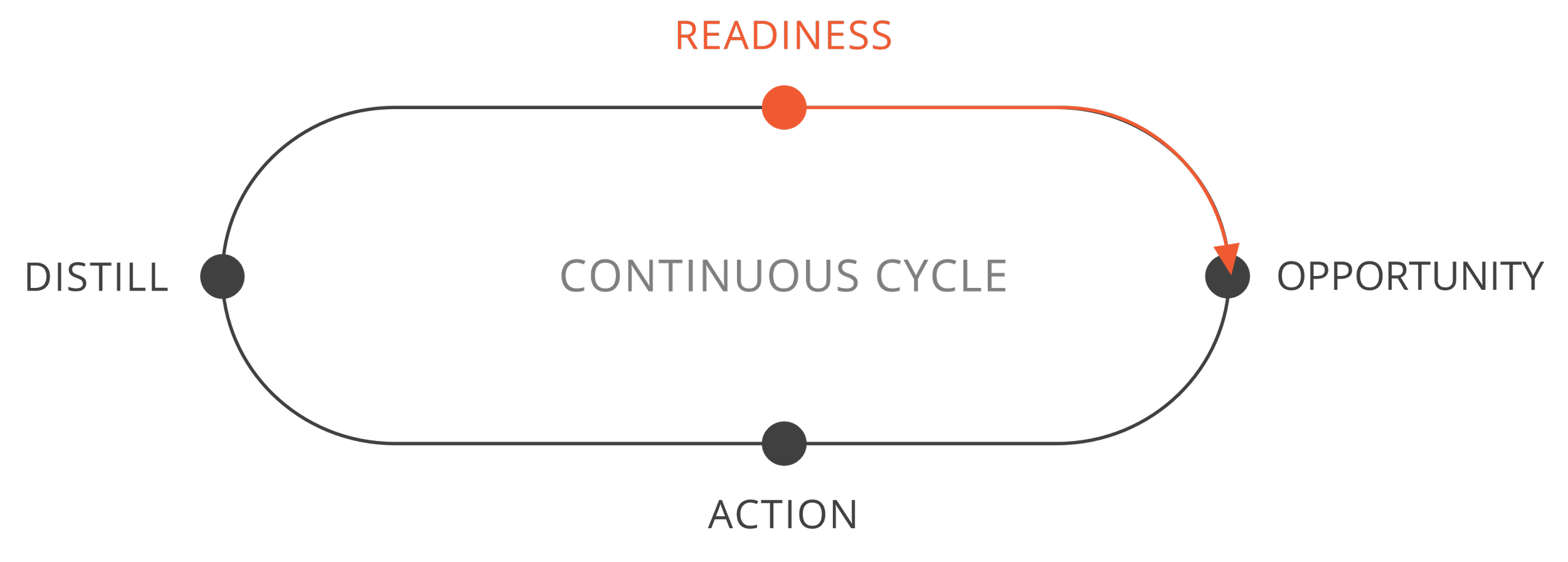
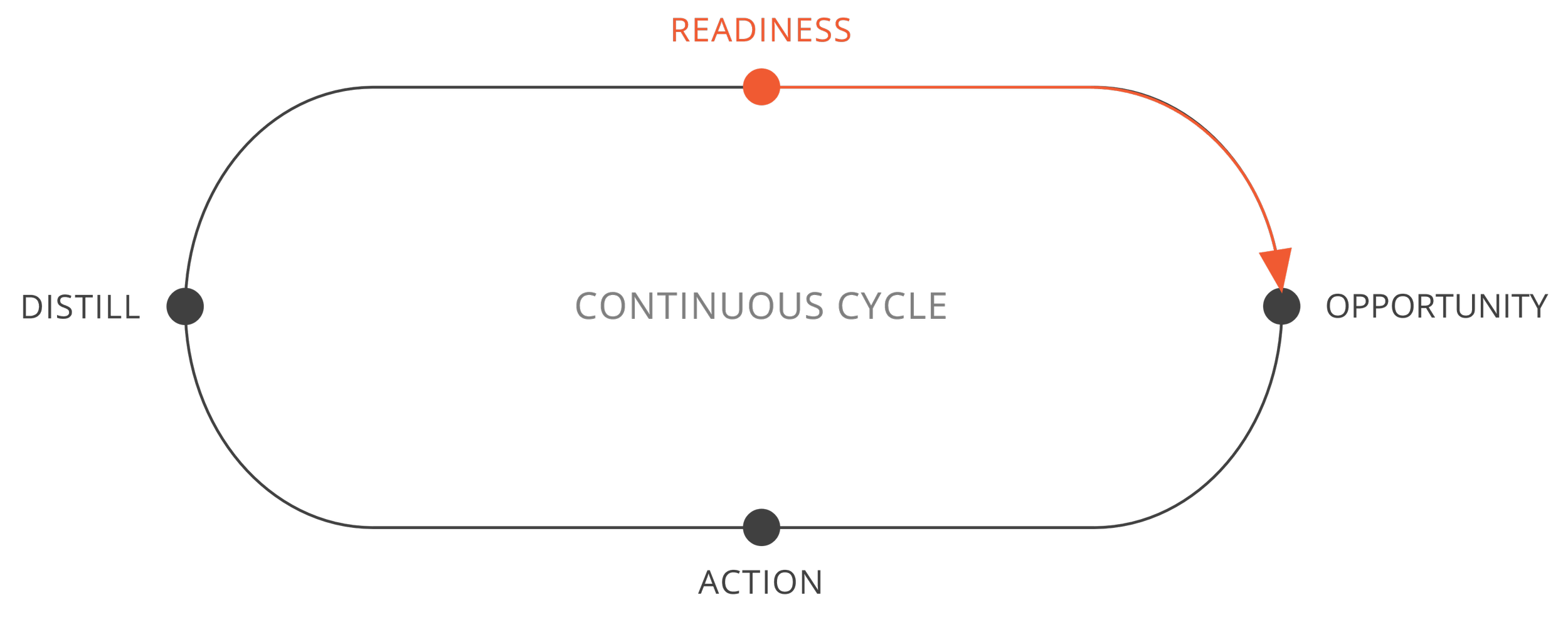
The baseline becomes the working reference for Phase 2: every potential initiative is tested against the maturity levels, constraints, and capacity that Readiness established. Opportunities get sized to reality, not to ambition.
Diagnosis is where every ROAD engagement begins.
Find out what
your organization can carry.
Thirty minutes. Your situation, our read on it, and whether structured work would change anything.